The UNESCO Institute for Statistics (UIS) has released its updated global education database, covering more than 200 countries and regions. The latest figures point to significant progress in enrollment but highlight persistent challenges in gender equality, teacher shortages, and education quality.
According to the data, women’s participation in STEM (Science, Technology, Engineering, Mathematics) fields has improved worldwide, yet they still represent only 35–40% of total graduates in these disciplines. The gender gap remains especially pronounced in developing countries, where access to higher education for girls is still limited.
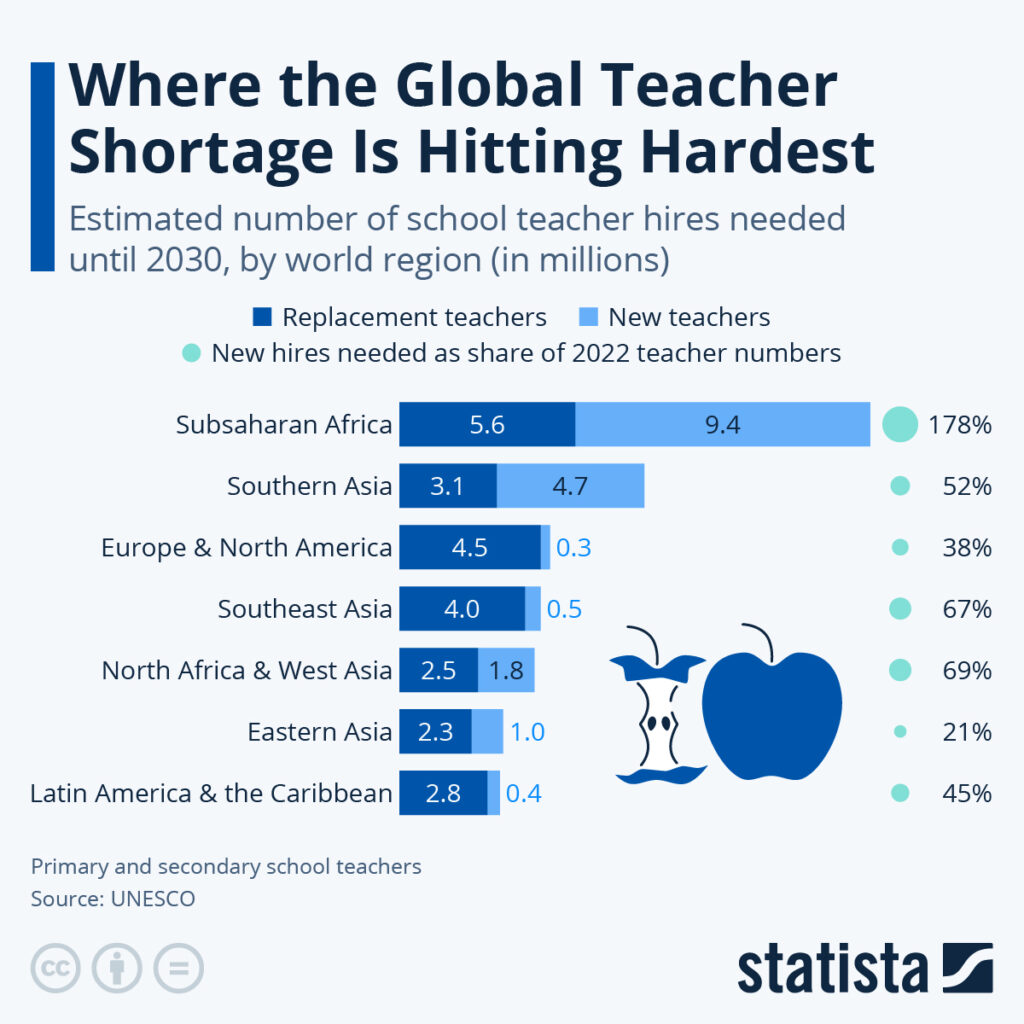
Teacher shortages also present a pressing issue. Sub-Saharan Africa alone is projected to require 15 million additional teachers by 2030 to ensure both access and quality. In South Asia, disparities in teacher training and resource allocation continue to widen the gap between urban and rural education systems.
About the Author